CHOOSE YOUR CLINIC
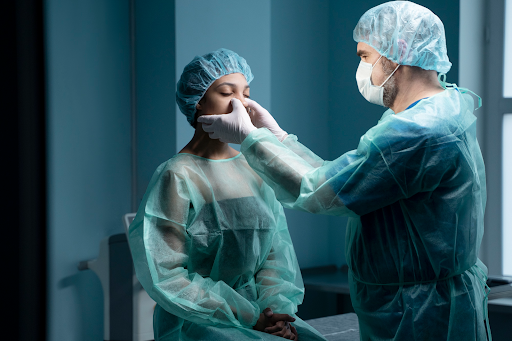
Rhinoplasty is a transformative cosmetic procedure that is preferred by many people worldwide. A person must be aware of the recovery procedure to ensure a smooth experience and a positive outcome.
Rhinoplasty is a cosmetic surgery procedure that changes the shape of the nose. People go for this treatment to change the appearance of the nose, improve breathing, or both. Rhinoplasty is popular because it can improve facial aesthetics, along with correcting functional issues.
People relying on Rhinoplasty nose jobs must understand the overall timeline (initial consultation to final result). This is helpful for a patient to recover both physically and mentally. The surgery takes place within a short span, but the recovery period is long. You need to wait to experience the visible changes. This blog examines the complete Rhinoplasty recovery timeline.
Rhinoplasty can reshape the nose of a person. This treatment method is used for:
Rhinoplasty helps a person achieve the desired result. Well, recovery takes up to a year. Let’s discuss the full timeline.
| Stage | Timeframe | Key Activities & What to Expect | Notes / Tips |
|---|---|---|---|
| 1. Initial Consultation | Week 0 |
- Discuss goals and desired nose shape - Medical history review - 3D imaging or facial analysis - Surgeon explains surgical plan & costs |
Bring reference photos and list of medications/allergies |
| 2. Pre-Surgery Preparation | 1–2 weeks before surgery |
- Blood tests and health clearance - Stop smoking & alcohol - Avoid aspirin, NSAIDs, and supplements that increase bleeding - Arrange post-op care and transport |
Follow pre-op instructions strictly to avoid complications |
| 3. Surgery Day | Day 0 |
- Outpatient procedure (usually 2–4 hours) - Performed under general or local anesthesia - Reshaping of bone, cartilage, or tissue - Nasal splint applied post-surgery |
You’ll need someone to drive you home |
| 4. Immediate Recovery (First 24–48 hours) | Days 1–2 |
- Swelling, bruising, mild discomfort - Nasal congestion or stuffiness - Keep head elevated; avoid blowing nose |
Use cold compresses; take prescribed pain meds |
| 5. Early Recovery Phase | Days 3–7 |
- Bruising and swelling peak, then start reducing - Splint and sutures may be removed after 5–7 days - Return to light daily tasks |
Avoid exercise, bending, and heavy lifting |
| 6. Short-Term Healing | Weeks 2–4 |
- Visible bruising fades - Residual swelling continues to subside - Return to non-strenuous work or school |
Makeup can cover minor bruises after 2 weeks |
| 7. Mid-Recovery Phase | Months 1–3 |
- Nose starts refining in shape - Swelling greatly reduced (about 70–80%) - Breathing feels more natural |
Follow-up appointments for assessment |
| 8. Long-Term Healing & Final Results | Months 6–12 |
- Final nose contour becomes visible - All internal swelling resolved - Scars (if any) fade significantly |
Protect nose from injury or sun exposure |
Table 1: The Complete Rhinoplasty Timeline
You need to visit a surgeon for an initial consultation before the rhinoplasty procedure. In this stage, the main goals are discussed, and your medical history is reviewed. A nasal examination is done. Doctors rely on 3D imaging or digital simulations to offer a dynamic view of the expected outcome. The surgeon might show you a Rhinoplasty before and after image.
The main task of the patient in this stage is to ask questions to the doctor. Like, you must ask about the chosen surgical approach (open or closed), treatment procedure, recovery expectations, costs, side effects, etc. You can ask whether non-surgical Rhinoplasty (Rhinoplasty non-surgical) applies to your case. Here are the main things that you need to bring during the initial consultation.
| Aspect | Role of the Doctor |
|---|---|
| Complete Medical History | Being aware of your past surgeries and existing medical conditions. |
| List of All Medications and Supplements | Checking whether any medicine or supplement interferes with anesthesia. |
| Photos of the Nose | Verifying the photos of your nose from different angles to understand the aesthetic concerns. |
Table 2: Documents and Information Required in the Initial Consultation
Referring to Rhinoplasty, early preparation is important to ensure a smoother recovery. This preparation begins 2-4 weeks before the surgery. The key duties of the surgeon are performing medical tests (ECG, complete blood count, etc.), obtaining photo documentation, and offering pre-op instructions.
What are the main considerations for a patient before the surgery? Well, a patient must stop certain medications a month before the treatment. Follow your doctor’s advice here. You need to stop smoking and drinking and arrange for proper recovery support.
You must stop aspirin, NSAIDs, and supplements that increase bleeding before the surgery. Rhinoplasty is a treatment, and not any magic. Hence, you must possess realistic expectations. Be aware of what Rhinoplasty nose lift can and cannot achieve.
Rhinoplasty is an outpatient procedure. You don’t need to stay in the hospital, and you can go home the same day after the surgery. Before it proceeds, you will be given general or local anesthesia. The surgery lasts around 1 to 3 hours.
The operation starts with the creation of an incision using a Rhinoplasty injection inside your nostrils (closed rhinoplasty) or across the base of your nose (open rhinoplasty). This is followed by raising the skin that covers the cartilage and nasal bones. The underlying bone and cartilage are added or reduced to form a new shape. Finally, the skin covering is replaced, and small stitches are used to secure the skin in place.
After the surgery, the surgeon acknowledges immediate post-op care and checks whether you are facing any complications. You will be discharged on the same day.
The first week after the surgery has utmost significance in the recovery process. But why? This is because swelling will be at its worst. Bruising and congestion are also normal. The initial week is all about protection and rest. The doctor will put a splint over the nose for support. Don’t touch that area. You must also ignore a blowing nose.
Not only the doctor, but the role of the patient is also important during this phase. Like, you need to maintain an elevated sleep posture and use cold compresses. Ignore engaging in any strenuous activity in the initial week. You might also find difficulty in breathing. The doctor will remove the splint after seven days.
Recovering from Rhinoplasty nose lift is time-consuming, and you must not hurry. Within 2 to 4 weeks, the bruises will fade and swelling will subside. Breathing will improve, and you can resume light activities. If your doctor has advised any ointment to put on the incision site, you must obey it.
In this phase, you can engage in light physical activities, but strenuous workouts and heavy lifting must be avoided. Ignore sun exposure and don’t put glasses on the nose. Allow enough time for healing. Well, emotional adjustment is important to deal with early-stage swelling.
The initial month after Rhinoplasty nose jobs is characterized by irritation and discomfort in the incision area. You will start feeling more comfortable in the refinement phase (2 to 6 months). During this time, most of the swelling and bruising will be gone, and the new nasal shape will become more defined. You will not face less trouble in breathing.
You can begin low-impact workouts (brisk walking or stationary cycling) after a month. If you want to execute any strenuous activity, you must consult with your surgeon. You must prioritize follow-up visits with your doctor. You might feel fully recovered, but internal healing will be ongoing. Don’t be overexerted; otherwise, the progress will be delayed.
The majority of the visible healing gets completed within six months, but subtle refinements continue into the first year. To obtain the nose shape you desired, it’s better to acknowledge the healing process for a year and follow everything the surgeon suggests. Contact the surgeon immediately if you experience any problems.
To maintain long-term results, you need to prioritize skincare and use sun protection while going out. A minimal swelling can persist even after a year. You can only witness the outcome once the swelling is completely gone. Therefore, you must stay up-to-date on follow-up appointments.
The recovery phase is not the same for all patients. Some might heal within a few months, while some have to wait for more than a year. Here are the key factors that impact the Rhinoplasty recovery timeline.
Before you plan for a Rhinoplasty nose lift, you must understand the probable risks. These include:
Try to rely on a well-known clinic so that you don’t face the above-mentioned risks.
Rhinoplasty is an effective procedure to shape a nose. The surgery might be completed within a few hours, but the recovery process can take place for over a year. Hence, all you need is to stay patient to get the desired result. Following your surgeon’s suggestions is important in every phase.
Choose us without any hesitation to get the desired result. With a team of skilled professionals, we can assure you a realistic result. Visit your nearest clinic to know more.
The structural changes from rhinoplasty are permanent. Well, results can change over the years. This is because of natural aging, like the weakening of cartilage and loss of skin elasticity. However, you will not find a drastic change.
No, packing is not done as it is uncomfortable for a patient. Instead, a splint will be put on your nose so that the new shape is protected. This stabilizes the nasal bones and lower swelling. This helps to reduce post-surgical swelling.
Patients need to eat nutritious food after the surgery. You must consume meals that are rich in vitamins A and C, protein, zinc, etc. For the first 1-2 months, soft and easy-to-chew foods are to be consumed. Well, you must always stay well hydrated.
The revision of a Rhinoplasty is variable, and this depends on the anatomy of the previously done procedure. Minor fixes can be done conveniently, but a major revision is quite complex. If the surgery is repeated, the recovery span gets longer.