CHOOSE YOUR CLINIC
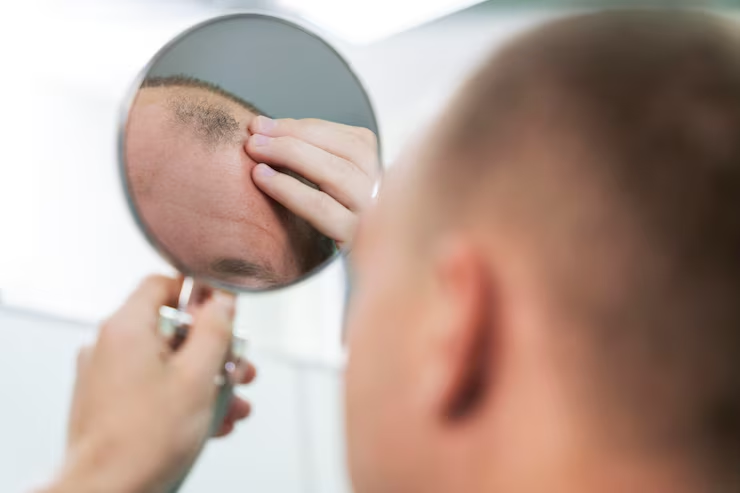
Alopecia (hair loss) is a common problem in Canada. Around 2% of the Canadian population is affected by alopecia areata at some point in their lifetime. What makes alopecia areata a concern is that it can affect people of all ages.
Key Takeaways:
Alopecia areata is an autoimmune disease that causes patchy hair loss. This mainly affects the scalp, but can be seen anywhere on the body, such as loss of eyebrows and eyelashes. The different classifications of this condition are alopecia areata totalis, alopecia areata universalis, diffuse alopecia areata, and ophiasis alopecia areata.
This article points out the causes, diagnosis, and treatment procedures of the disease.
Let’s compare different types of the disease:
| Types | Main location | Hair loss extent | Characteristics |
| Totalis | Scalp | Complete | Loss of scalp hair |
| Universalis | Full body | Complete | Complete loss of scalp and body hair |
| Diffuse | Scalp | Wide | Widespread thinning |
| Ophiasis | Back or the sides of the scalp | Band-like | Band-like hair loss |
Table 1: Comparing Different Types of Alopecia Areata
Alopecia areata can be caused by the following reasons.
The immune system of your body has a definite contribution towards getting affected by alopecia areata. There can be an instance when your body’s immune system mistakenly attacks hair follicles. This causes inflammation, which disrupts the hair growth cycle.
Do you have a family history of alopecia areata or any other hair loss condition? If yes, you might have to deal with this condition. Here are the main genetic components that can contribute to this disease.
Alopecia areata can be caused by certain triggers. These include:
Before you seek any treatment for alopecia areata, you need to be aware of the signs and symptoms. Let’s find out.
If you suddenly witness a white or peach-coloured circular patch of hair loss on the scalp, it can be a sign of alopecia areata. Well, you can also witness hair loss on the beard. Losses of eyebrows and eyelashes are also common alopecia hair loss symptoms.
Often, people witness short and broken hairs that are narrower at the base than at the tip. This is mainly seen at the edge of the bald spot. This is a common sign of the stated disease.
Is your scalp skin itching or tingling? If so, there is a high chance of hair falling out. This is a common symptom of alopecia areata.
Around 30% of people who suffer from alopecia areata witness changes in their nails. Tiny dents are common. You can see red nails where ridges run along the nails’ length. Meanwhile, you can also see brittle nails that split.
A physical examination of the bald spots is enough to diagnose this condition. If the clinician fails to understand, your scalp will be examined for infection signs.
A hair sample will be taken and will be analyzed in the lab. A scalp biopsy is also done to check for any skin disease. Here is a first appointment checklist.
Apart from knowing what is alopecia hair loss, you need to understand the probable treatments for the condition. Let’s understand the treatment options for alopecia areata.
Like other hair loss conditions, alopecia areata can also be treated with topical medicines. These aim to lower inflammation along with stimulating hair follicles. The key ones are:
Topical Minoxidil is considered to combat alopecia hair loss symptoms. Let’s understand.
Mechanism: Acting as a vasodilator, this stimulates dormant hair follicles. This contributes to hair regrowth once the attack is completed.
Suitable for: This is best suited for mild, patchy hair loss. This works best combined with topical corticosteroids.
Application: Rogaine is applied directly to the skin once or twice daily. You must not wash your scalp for four hours afterwards.
When you are looking for an effective alopecia hair fall treatment, you can go for corticosteroid therapy.
Mechanism: Corticosteroid therapy acts as a potent anti-inflammatory and immunosuppressive agent that acknowledges the T-cell-mediated immune attack on hair follicles. They minimize autoimmune activity while allowing hair follicles to return to the anagen phase.
Suitable for: This therapy is suitable for adults with less than 50% scalp involvement.
Application: Intralesional injections are applied directly into the affected scalp areas every 4 to 6 weeks. Corticosteroids can be injected into the muscle for extensive hair loss conditions.
Topical immunotherapy is a first-line treatment for severe or widespread alopecia areata. Let’s discuss.
Mechanism: This works by producing contact dermatitis (a rash) on the scalp. This disrupts the autoimmune attack on hair follicles.
Suitable for: Patients with over 50% scalp involvement can go for this therapy. If you are suffering from alopecia totalis (entire scalp) or alopecia universalis, this is a suitable treatment option for you.
Application: This therapy begins with applying a high concentration of Diphenylcyclopropenone in an isolated scalp area. This is followed by an application of a lower concentration after two weeks.
Systemic Janus Kinase (JAK) inhibitors are targeted oral treatments to combat alopecia areata.
Mechanism: JAK inhibitors like Baricitinib, Ritlecitinib, and Deuruxolitinib ensure hair regrowth by blocking the autoimmune pathway (JAK pathway). By selectively blocking Janus Kinase enzymes, they allow follicles to exit the resting phase and contribute to hair regrowth.
Suitable for: Adults and adolescents with moderate to severe scalp hair loss are ideal for this treatment. Go for this one if you have not witnessed results in immunotherapy or corticosteroid therapy.
Application: JAK inhibitors are administered via oral pills (capsules or tablets) once or twice a day. This modulates the immune system, thereby promoting hair regrowth.
Going beyond medications and therapies, alopecia areata can be treated via non-medical supportive care. This helps to treat hair thinning in alopecia. Let’s know the common strategies.
| Option | What to Consider |
| Sun protection | Consider hats or sunscreen for exposed, hairless skin |
| Support | Choose support groups for managing the emotional impact |
| Lifestyle modification | Stress reduction exacerbates the condition |
Table 2: Non-medical Supportive Care for Alopecia Areata
When you are aware of the alopecia areata treatment options, you must be knowledgeable of the coping and management strategies. These include:
Psychological support: The concerned hair loss condition has a deep psychological impact. Engaging in counseling is a good option here
The Montreal chapter of the Canadian Alopecia Areata Foundation (CANAAF) provides local support, resources, and community connections for individuals dealing with the disease in this region. A key focus is given on combating the social and emotional challenges of the hair loss condition.
We are a renowned dermatology clinic in Canada. We offer a range of procedures to treat hair loss. Visit us and interact with a specialist dermatologist for a Cosmetic Dermatology treatment to understand the right treatment for you. Get it done and elevate your self-esteem.
Whether you consider topical treatments or any therapy, there is no chance of damaging the brain. Well, the condition is highly linked to brain-related psychiatric issues. Patients often experience anxiety and depression because of the emotional distress of hair loss.
Alopecia areata goes away when the underlying causes are gone. If you are experiencing hair loss because of stress, the condition will not persist when your stress level will be reduced. This indicates the need for treating the actual causes.
Every case of alopecia areata is unique. The hair grows back, but can fall later for some people. Meanwhile, others might witness that hair grows back and never falls out again in the future.
In short, no. This condition is not spread through skin-to-skin contact or sharing items. This is an autoimmune condition that cannot be spread through any form of physical contact.
In short, no. They are maintenance therapies. The hair loss will return if you stop taking the medication. This is because, in such cases, in the absence of the mitigating impact of the medication, there is a chance that the overactive immune response will return.